
 Image 1 of 2
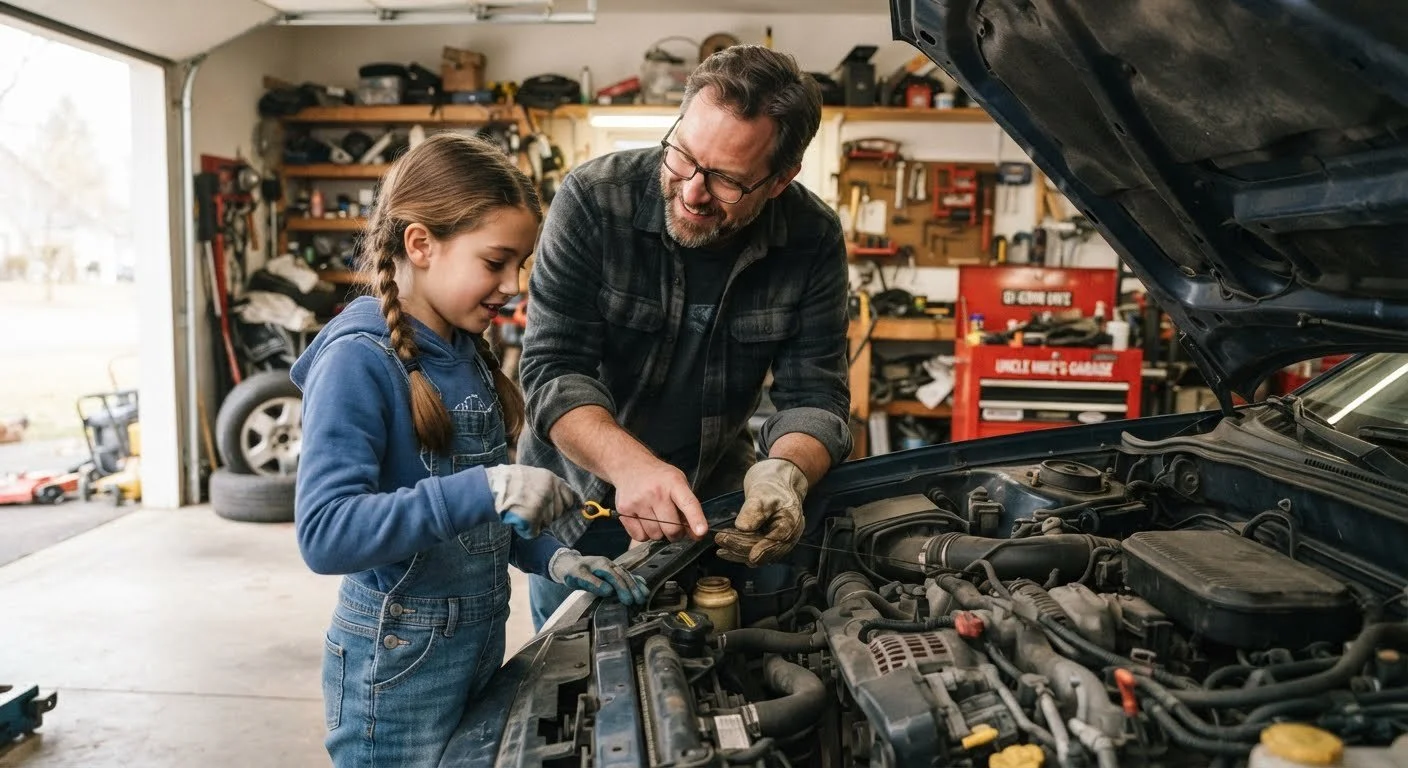 Image 2 of 2
Fluid Checks and Top-offs
Fluids are the lifeblood of your vehicle. You will learn how to locate, check, and safely top off the following essential fluids:
Engine oil: How to use the dipstick to check oil levels and understand the difference between oil types.
Coolant (Antifreeze): Checking the expansion tank safely (never opening it when hot) to prevent engine overheating.
Brake fluid: Inspecting the reservoir level and understanding why a sudden drop indicates a safety issue.
Windshield washer fluid: Locating the reservoir and choosing seasonal fluids.
Power steering fluid: Checking levels to ensure smooth, responsive steering.
Tire Care and Maintenance
Tires are your car's only contact with the road. Proper maintenance ensures safety and improves fuel economy:
Pressure checks: Learning how to use a tire pressure gauge and locate your car's correct PSI (found on the driver’s door placard).
Tread inspection: Using the "penny test" or looking for built-in tread wear indicator bars to know when tires are bald.
Changing a flat: Master the step-by-step physical process of safely using a jack, jack stands, and a lug wrench to install a spare tire.
Tire rotation: Understanding why tires need to be rotated regularly to ensure even wear.
Essential Component Replacements
You will learn to swap out consumable parts that do not require advanced mechanical tools:
Air filters: Replacing both the engine air filter and the cabin air filter to maintain engine health and air quality.
Wiper blades: Identifying signs of wear (streaking, squeaking) and snapping on new blades.
Light bulbs: Changing dead headlights, taillights, turn signals, and cabin lights.
Battery and Electrical Basics
Car batteries have a finite lifespan. You will cover how to manage and maintain your car's electrical core:
Jump-starting: Learning the exact, safe sequence for attaching jumper cables to avoid dangerous sparks.
Terminal cleaning: Removing corrosion (white, powdery buildup) from battery terminals using a wire brush and a simple baking soda solution.
Battery health: Recognizing signs of a failing battery, like slow engine cranking or dimming lights.
Dashboard Warnings and Documentation
Knowing what your car is trying to tell you prevents expensive breakdowns:
Indicator lights: Deciphering critical warning lights, such as the Check Engine, Oil Pressure, Battery, and Brake warnings.
The Owner's Manual: Navigating this book to find your specific vehicle's ideal maintenance schedule, oil weight, and part numbers.
Fluid Checks and Top-offs
Fluids are the lifeblood of your vehicle. You will learn how to locate, check, and safely top off the following essential fluids:
Engine oil: How to use the dipstick to check oil levels and understand the difference between oil types.
Coolant (Antifreeze): Checking the expansion tank safely (never opening it when hot) to prevent engine overheating.
Brake fluid: Inspecting the reservoir level and understanding why a sudden drop indicates a safety issue.
Windshield washer fluid: Locating the reservoir and choosing seasonal fluids.
Power steering fluid: Checking levels to ensure smooth, responsive steering.
Tire Care and Maintenance
Tires are your car's only contact with the road. Proper maintenance ensures safety and improves fuel economy:
Pressure checks: Learning how to use a tire pressure gauge and locate your car's correct PSI (found on the driver’s door placard).
Tread inspection: Using the "penny test" or looking for built-in tread wear indicator bars to know when tires are bald.
Changing a flat: Master the step-by-step physical process of safely using a jack, jack stands, and a lug wrench to install a spare tire.
Tire rotation: Understanding why tires need to be rotated regularly to ensure even wear.
Essential Component Replacements
You will learn to swap out consumable parts that do not require advanced mechanical tools:
Air filters: Replacing both the engine air filter and the cabin air filter to maintain engine health and air quality.
Wiper blades: Identifying signs of wear (streaking, squeaking) and snapping on new blades.
Light bulbs: Changing dead headlights, taillights, turn signals, and cabin lights.
Battery and Electrical Basics
Car batteries have a finite lifespan. You will cover how to manage and maintain your car's electrical core:
Jump-starting: Learning the exact, safe sequence for attaching jumper cables to avoid dangerous sparks.
Terminal cleaning: Removing corrosion (white, powdery buildup) from battery terminals using a wire brush and a simple baking soda solution.
Battery health: Recognizing signs of a failing battery, like slow engine cranking or dimming lights.
Dashboard Warnings and Documentation
Knowing what your car is trying to tell you prevents expensive breakdowns:
Indicator lights: Deciphering critical warning lights, such as the Check Engine, Oil Pressure, Battery, and Brake warnings.
The Owner's Manual: Navigating this book to find your specific vehicle's ideal maintenance schedule, oil weight, and part numbers.